
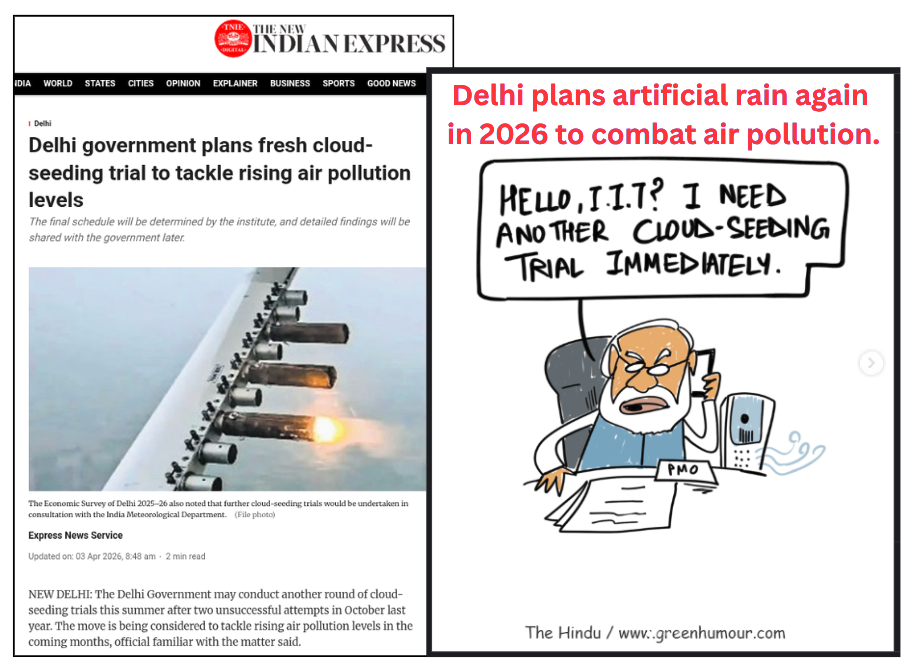
In 2025, the government attempted to mitigate air pollution in Delhi through the deployment of artificial rainfall technology. The factors contributing to the failure of these initiatives over the past few years are detailed in our report. Looking ahead to 2026, the government plans to leverage artificial rainfall technology once again to curb pollution in Delhi. Will it actually be possible to control air pollution in Delhi or other cities through cloud seeding technology?
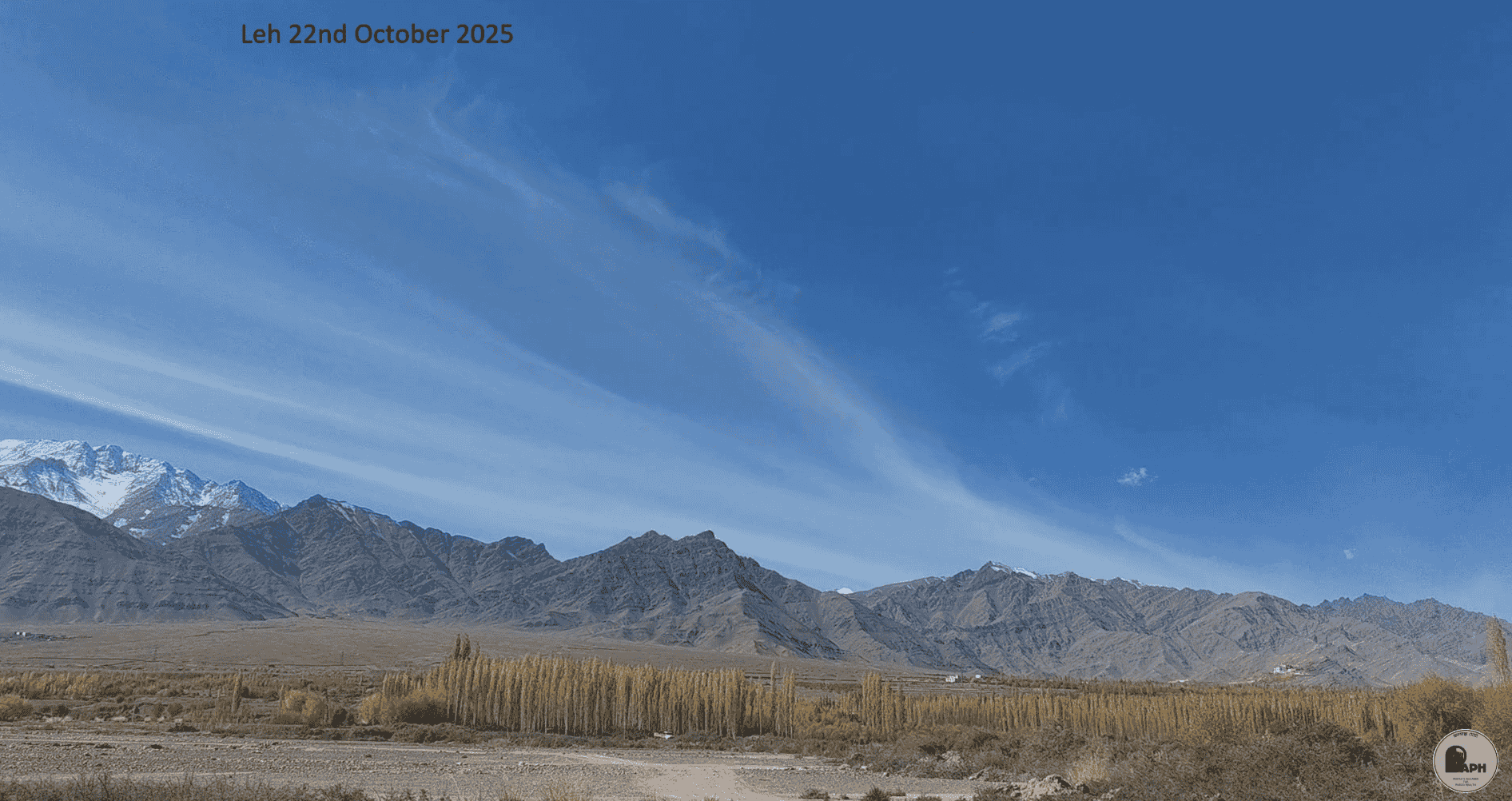
In terms of topography and weather, Ladakh stands in stark contrast to our state, West Bengal. Located on the Gangetic plains, our state exhibits a tropical climate whereas Ladakh is a high altitude cold desert. Nevertheless, we tried to explore the possibility whether there is any similarity between the environmental crisis in our state and in Ladakh? In October 2025, we, the three musketeers of JanaSwasthya Morcha (People’s Alliance for Public Health, PAPH), tried to find the answer to this question during our visit to Ladakh.

We, JanSwasthya Morcha or People's Alliance for Public Health (PAPH), have written an open letter to Shri Narendra Modi, Prime Minister of India and the Ministry of Health & Family Welfare expressing our deep apprehension relating a high-priority event of global consequences which is believed to gravely affect the sovereignty of our country :
WHO PANDEMIC AGREEMENT & AMENDMENTS TO IHR 2005
Once this agreement comes into force, national health budget allocations and national health policy would be authoritatively decided by a transnational entity WHO.
We request all conscious individuals to go through our letter and decide for themselves whether the PANDEMIC AGREEMENT is going to improve our national public health scenario in any way at all.
Bhaskaran Raman , Professor at IIT Bombay. Author of the book “Math Murder in Media Manufactured Madness”, presenting simple math to illustrate various absurdities related to the mainstream Covid-19 narrative.
Is the ICMR study on sudden deaths reliable? There's more to it than meets the eye.
Dr. Amitav Banerjee was a field epidemiologist for over two decades in the Indian Army. He led the mobile epidemic investigation team at the Armed Forces Medical College in Pune, India, from 2000-2004. During this period, he investigated a number of outbreaks in the country. He is presently a professor at a medical college in Pune and an academic editor at PLOS ONE journal.
Putting to rest, the questions of leading economists about the future of the neoliberal form of global capital, one of the theoreticians of this global capital has stated bluntly that the ‘inevitable’ future of the people, the people dependant upon their labour is bleak to say the least. He went on to say blatantly, on our face that this is the way forward for the survival and prosperity of capital! That the capitalists are using the current pandemic to reset the economy into what he calls the fourth industrial revolution. Is the world really facing the horror story that he has knit?
All beginnings have a backdrop, a history. Searching the history of this pandemic led us back, to a decade and more, unfolding event after event. Are all these events, throughout the last decade or so, unrelated to each other? Can a chain of co-incidents of such a scale be possible in reality?