
January, 2026
Recently, the Minister of State for Environment, Kirtivardhan Singh, reassured the public that there is no direct correlation between air pollution and respiratory diseases. In reality, however, residents across all metropolitan areas and nearly every major city in the country are facing severe distress. Reflecting the gravity of the crisis, a majority of the world's 100 most polluted cities are located in India. Owing to arid weather conditions, air pollution levels in these urban centres surge exponentially during the winter season. Throughout winter, the air quality index in cities such as Delhi, Kolkata, Kharagpur, Ghaziabad, Agra, Lucknow, Kanpur, Varanasi, Ambala, Amritsar, Patna, Bhubaneswar, and their surrounding regions consistently hovers within the 'severe' or 'unhealthy' categories. For over a decade, sustaining normalcy in the capital city of Delhi during the winter months has become increasingly challenging. Beyond causing disruptions to road, rail, and air transit, the toxic air has left a vast segment of the population—particularly children and the elderly—grappling with chronic respiratory complications. For years, authorities remained complacent, attributing Delhi’s pollution primarily to the century-old practice of stubble burning by farmers in Punjab. However, agricultural practices have modernized recently with the adoption of new machinery. Despite a significant reduction in stubble burning, pollution levels in Delhi and the broader Indo-Gangetic plains of North India continue to escalate rather than recede. Over the past decade, stringent restrictions have been imposed on aging petrol and diesel vehicles, while autorickshaws transitioned to cleaner gas fuels much earlier. What, then, accounts for the relentless surge in air pollution across Delhi and other metropolitan cities?
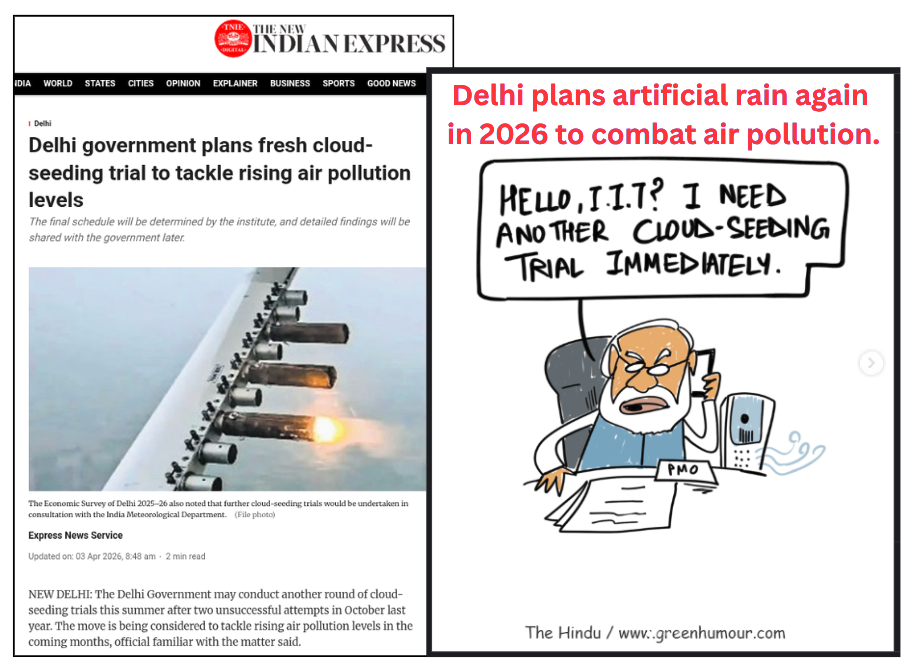
Against the grim backdrop of Delhi’s choking pollution, the long-standing nexus between the government and corporations to systematically wipe out the Aravallis—India's oldest mountain range—has come under intense public scrutiny. Facing widespread public resistance, the Supreme Court recently decreed a temporary freeze on issuing fresh mining leases in the Aravalli. Nevertheless, according to 2018 estimates, 25% of the mountain range within Rajasthan alone has already been decimated, with over 50 individual hills entirely erased by mining operations. Historically, the Aravalli range acted as a critical barrier, shielding Delhi and its contiguous regions from the encroaching sands of the Thar Desert and the seasonal smoke of stubble burning from Punjab. The dense forests that once carpeted its slopes and foothills, serving as the region's ecological lungs, have virtually vanished. Meanwhile, the administration continues to pursue superficial measures to combat air pollution, such as banning tandoor ovens and allocating three crore rupees toward speculative cloud-seeding initiatives.
Why artificial rain cannot provide clean air?
At the beginning of winter in 2025, the Delhi government launched a vigorous campaign to combat air pollution. Under the supervision of . The government and various media outlets repeatedly announced that this was the first attempt to induce artificial rain in Delhi.
However, the world's first attempt to induce artificial rain by cloud seeding began during World War II. The first successful cloud seeding in India took place in Kolkata on August 17, 1952. Under the supervision of Dr. Sudhanshu Kumar Banerjee, it was possible to cause heavy rainfall in Jadavpur and Ballygunge at a very low cost. A mixture of dry ice, salt, and silver iodide was sprayed into the sky from hydrogen balloons. In the traditional cloud seeding method, these particles are sprayed from an airplane. Due to the use of balloons instead of airplanes, it cost only 18,000 rupees in Kolkata at that time.
The history of cloud seeding in Delhi and other regions of our country is also quite old. The first government attempt to induce artificial rain in Delhi was made between 1957 and 1966. Several successful experiments were conducted during that time to bring artificial rain through cloud seeding. In 1966, a research paper on the subject was published by the National Physical Laboratory in the journal of the Meteorological Society of Japan. (1)
Speculation has been brewing since 2018 over whether this technology could be deployed in Delhi to curb air pollution. This is because, at that time, numerous successful trials of inducing artificial rain were conducted every year in the rain shadow region of the Western Ghats. Following the separation of Andhra Pradesh and Telangana into distinct states, the two states approached the court to settle how much money each state would pay to 'Barishwala' private company. The first news of conducting artificial rain in Mumbai was heard in 2003. In 2014, the Vedanta company commissioned another private company for artificial rain in Rajasthan. Among these, many contracts were secured by the Bangalore-based company Agni Aero. Additionally, there are government institutions like IIT Kanpur and private entities like Raintech Solutions. Annual income and expenditure statements of these companies reveal that in 2014–2015, the cost of cloud seeding in India per square kilometer was one lakh rupees.(4, 5) In 2025, the cost for each aircraft flight for cloud seeding in Delhi was sixty lakh rupees. The total cost of cloud seeding in Delhi throughout the entire winter season is approximately 25 crore rupees.
At the national level, the CAIPEEX project (Cloud Aerosol Interaction and Precipitation Enhancement Experiment) under the Ministry of Earth Sciences manages and operates all data and procedures related to artificial rainfall. One of the primary objectives of this project is to scientifically evaluate the effectiveness of cloud seeding as a method to increase rainfall in rain-shadow and drought-prone areas. CAIPEEX reports that during 2017–2018, it was possible to induce 18% additional rainfall in the Solapur region of Maharashtra. Very recently, attempts were also made in Rajasthan to induce artificial rain by spraying aerosols using drones. Therefore, the history of cloud seeding is not new in India, nor even in Delhi. Why, then, are the government and the media declaring the current cloud seeding event as the first attempt or experiment in Delhi?(3, 11)
In 2023 and 2024, plans were discussed to deploy artificial rainfall technology to curb pollution in Delhi during the monsoon and the onset of winter. However, the monsoon initiative was shelved over concerns that cloud seeding during the rainy season could trigger torrential rainfall or severe flooding. (2) At the end of June 2025, the government launched a cloud seeding project to manage pollution levels in the capital. Owing to the risk of excessive rainfall, the project was deferred from late August to September 10. While no official reports have surfaced regarding the ultimate execution or cancellation of this project, Delhi did experience heavy downpours and subsequent flooding during that exact window. Furthermore, over the past two years (2023 and 2024), winter cloud seeding plans were called off—much like this year—because atmospheric humidity dropped below 15%. The air in the Delhi region grows increasingly arid at the start of winter; without adequate moisture in the atmosphere, spraying aerosols to condense vapor and induce cloud formation remains unfeasible. (6, 7, 8, 9, 10)
Given the nationwide scale of this technology's deployment, the government likely possessed substantial data on cloud seeding, supplemented by the insights gained from trials conducted in Delhi over the last two years. Consequently, framing this initiative as a pioneering cloud seeding effort for pollution control appears less like a milestone and more like a political gimmick—a move that is both absurd and deeply discouraging.
In the technology used to induce artificial rainfall, salts such as calcium chloride or silver iodide are dispersed into the atmospheric layers as aerosols. The government ought to possess adequate research-based data regarding the impact of these chemicals on humans, wildlife, water bodies, soil, and the broader ecosystem. Before employing cloud seeding as a mere gimmick for pollution control, is it not an urgent necessity to present this data to the public?
During winter, the entire region from Delhi to Kolkata remains blanketed in dense fog. Due to natural climatic patterns, fog typically forms over the vast plains of North India during the winter season, especially late at night or early in the morning. When the ground is at its coldest during these hours, the water vapor near the earth's surface undergoes condensation. This water vapor condenses onto dust, smoke, or other solid particles suspended in the air. Small water droplets accumulate around a single dust particle and float in the atmosphere. When this moisture collects drop by drop on blades of grass or tree leaves, it trickles down to the ground; we call this dew.
The formation of fog requires adequate moisture in the air, floating dust or other particulate matter, and a low temperature near the ground (dew point). Due to pollution in the river basins of North India, there is no scarcity of solid particles in the air. The reason Delhi and its adjoining regions are covered in dense fog during winter is that the particles required for water vapor to condense (condensation nuclei) are abundantly present in the air in the form of smoke from burning various fuels and dust from the construction industry. Data shows that particulate matter (PM2.5 and PM10) in Delhi's air is excessively high.
During cloud seeding operations, the solid salt particles dispersed into the atmosphere serve as condensation nuclei. Water vapor condenses upon these particles, culminating in rainfall or snowfall provided there is adequate moisture in the air. Conversely, under specific temperature conditions, they can induce fog. The government's efforts to control air pollution through cloud seeding over the past three years have yielded neither rain nor clean air. But has the problem of fog increased as a result of conducting these experiments? (13) Has the government conducted any survey regarding this matter? It is the urgent duty of the government to bring those facts and data before the public. (14)
I urge everyone to seriously consider whether greater caution is needed regarding the adoption of cloud seeding technology in our country. Artificial rain experiments are not confined to the controlled environment of a laboratory; instead, precipitation containing chemical compounds falls directly onto our lands and citizens.
Deploying climate intervention technologies like cloud seeding demands public consent. Notably, cloud seeding and similar weather modification techniques have been subjects of international treaty restrictions since 1976. This is because cloud seeding and all other forms of climate control technology have been classified as weapons of war.(12) Various United Nations member states, including India, are bound by an international treaty not to use this weapon (climate control technology) against any enemy country. Today, that very weapon of war is being presented as a blessing of technology and is being indiscriminately deployed on the citizens of the country. The ironic part is that we ourselves are bearing the cost of being turned into laboratory guinea pigs!
We demand clean air and chicken tandoori!
Although the country's Ministry of Environment views the issue of Delhi's pollution with indifference, data shows that the levels of PM2.5 and PM10 in Delhi city are highly alarming. The World Health Organization and other health guidelines state that the regular presence of particulate matter (PM) in Delhi's air can lead to various respiratory symptoms and diseases. Extensive research has been carried out for many years regarding the sources of these particles in Delhi city. Here, we would like to present some of our views regarding these sources:
a) PM10 particles are relatively large in size. Apart from carbon or other solid particles produced by burning fuel, other major sources of PM10 particles are dust from new construction projects, roads, sand from the Thar Desert. For many years, the slopes of the Aravalli Hills have been cut down to supply marble and other stones for the construction industry, as well as to manufacture cement or bricks. The destruction of the Aravallis is directly linked to the dust and sand problem in this region. If the destruction of the Aravallis is not stopped permanently, not only will North India be plagued by air pollution, but the Thar Desert will also continue to expand in size. Stubbles burning by farmers also generates a large amount of PM10 particles. However, based on the current measurement and nature of PM10 in Delhi's air, it is estimated that biomass burning is no longer the primary cause of Delhi's pollution.
b) For the past two years or so, PM2.5 particles have been observed to be the most polluting and hazardous component in Delhi's air. Apart from desert sand or road/construction dust, the primary source of PM2.5 in the air is the burning of fossil fuels. Thermal power plants, petrol/diesel-powered vehicles, and waste disposal through burning are the main causes of PM2.5 pollution. And yes, preparing food like chicken tandoori does indeed generate PM2.5!
According to data from 2023–2024, Bengaluru has overtaken the capital city of Delhi in terms of having the highest number of active private cars in India. Although several old laws regarding the use of old petrol and diesel vehicles have recently been strictly enforced in Delhi, the pollution problem remains alarming. This is because the total number of vehicles in Delhi (Delhi NCR or National Capital Region) is still higher than the combined number of private cars in Kolkata, Mumbai, and Chennai.
The number of luxury cars in the capital city of Delhi is also massive. It is astonishing to see the kinds of expensive sports cars or 4x4 vehicles that regularly congest the roads in Delhi. Even though these vehicles comply with BS-VI—the latest statutory emission standards—the heavily powerful engines of these cars burn such a massive amount of petrol or diesel fuel that they produce large quantities of PM2.5 particles in addition to carbon dioxide. The higher the engine capacity, the greater the fuel consumption and the resulting pollution from fuel combustion. When a car is no longer just a means of transport but becomes a social status symbol, 2000 cc engine private cars sell like hotcakes even in a city where the average vehicular speed is just 25 kilometers per hour.
In addition, there is the use of generators. There are very few places in Delhi where a regular, uninterrupted power supply is available. On average, various areas of Delhi NCR face power outages lasting 2 to 10 hours throughout the year. High-rise buildings, offices, shopping markets, and luxurious bungalows—all use generators to maintain an uninterrupted supply of electricity. And generators inherently mean diesel engines. However, the laws regarding the use of old generators are not as strict as those for old vehicles. The diesel engines of generators emit huge amounts of PM2.5 and PM10. For many years, the government has been unable to provide electricity according to the demand in the capital city of Delhi. Therefore, the government remains completely silent about the role of generators in pollution. Can liberation from the problem of air pollution really be achieved simply by shutting down roadside tandoor ovens?
c) Sulfur dioxide or various oxides of nitrogen are among the major causes of air pollution. They are produced by the combustion of any type of fossil fuel or natural gas. While these gases directly damage the respiratory system, they also indirectly increase the amount of PM2.5. These gases are present in excessive amounts in Delhi's air. Diesel engines and thermal power plants are the primary causes of this type of pollution. The dense forests surrounding Delhi city that were visible even twenty years ago have now completely vanished. Furthermore, while the laws regarding carbon emissions for vehicles or factories in our country are strict, government regulations for other polluting gases are inadequate. For instance, companies are not obligated to publish almost any information regarding the emission of sulfur dioxide or other polluting gases for various vehicle models. Several thermal power plants have existed for many years within a 300-kilometer radius of Delhi. These power plants or the electricity from the North Indian power grid are not sufficient to meet the growing power demands of Delhi city. To make up for the electricity shortage, people use generators, creating even more pollution. The demand for electricity in high-rise apartments or luxurious bungalows is also sky-high. Passages and staircases remain illuminated day and night. Powerful pumps are used to lift water. The residents of those houses live all year round inside an artificial bubble—where air conditioners run in summer and heaters in winter.
Unplanned urbanization is the root cause of air pollution in all cities across the country, including Delhi. The problem of air pollution cannot be escaped simply by banning roadside coal stoves or causing artificial rain through cloud seeding. According to government estimates, under the current model of development in our country, nearly 50–70% of the population will reside in cities by 2050. Yet, the government is unable to provide even the current urban residents with clean air, purified drinking water, healthy housing, and electricity according to their demand.
Alongside this exists the luxurious lifestyle of the wealthy. The amount of air pollution caused by a poor person cooking over an open fire is vastly outnumbered by the pollution generated when a single individual commutes across the city daily in a 2000 cc car, runs an air conditioner or heater constantly, or uses generators for uninterrupted power supply in bungalows and apartments. Just as our economic structure shows a massive disparity in the income and expenditure of the rich and the poor, an inequality is also evident when calculating their carbon footprints. When calculating per capita pollution, today's prevailing model of development stands in stark contrast to the humble tandoor oven.
Under this current development model, while an unplanned concrete jungle arises on one hand, the government, on the other hand, easily sells off the country's water, forests, and land to corporate mafias in the name of economic progress. Aggressive corporate greed does not care for nature, the environment, humans, or animals; to it, life is utterly worthless. Corporate profit is the driving force behind this prevailing model of development. Consequently, they disregard environmental regulations during mineral extraction in the Aravalli mountain range and effortlessly clear away thousands of years old forest lands. The exact same picture is visible everywhere—from Ladakh and Kashmir to Chhattisgarh, Odisha, and even Nicobar.
The Legend of Niyamgiri
The story goes back nearly two decades. The then government—both central and state working in tandem—had paved the way for the conglomerate Vedanta to extract bauxite from Odisha’s Niyamgiri Hills. For the local Dongria Kondh indigenous community, Niyamgiri is not just land; it is a sacred deity. The hills serve as the lifeline for twelve Kondh villages, providing their sole source of water, while the surrounding forests sustain their life and livelihood.
Had Vedanta’s project moved forward, the ecological fallout would have been catastrophic. Bauxite mining would have entirely decimated the pristine forests and rivers. The villagers would have faced forced displacement, or worse, a bleak future reduced to meager daily-wage laborers in the very mines that destroyed their home.
Standing as one, the twelve Gram Sabhas (village councils) resolved to halt the corporate giant. Through a decade of relentless, unified resistance, the people of Niyamgiri successfully blocked the project. Their struggle is now etched in history. The inhabitants of just twelve small villages triumphed over a 12-billion-dollar multinational corporation.
The government had aided that corporation in every possible way using the police administration. Yet, they could not stand against the stubborn determination of the local indigenous people. The anthem of that struggle by ordinary people against the all-powerful government-corporate nexus still resonates on everyone's lips today :
“Gaon choraab nahi,
Jangal choraab nahi,
Maa e maati choraab nahi,
Ladaai choraab nahi.”
"We will not leave the village, we will not leave the forest, we will not leave the motherland, we will not give up the struggle."
[This report first appeared in the Book Fair 2026 edition of 'JanaSwasthya JanaBarta', the official organ of the JanaSwasthya Morcha (PAPH).
The writer is a teacher and a member of PAPH.]
References :
1)https://www.researchgate.net/publication/316230402_Weather_Modification_in_India
2) At Rs 89 crore for 2 yrs, cloud seeding went through roof https://share.google/OxkxDgqyCn774fO8a
3) CAIPEEX Press Release: Press Information Bureau https://share.google/j8L3I17YvmMZRteUK
4) Pay ₹40.28 crore towards cloud-seeding, HC directs AP, TS - The Hindu https://share.google/fmzZ2N8bRqfEBFd68
5) Artificial rainfall: Cloud seeding companies may play rainmakers
Read more at:
https://economictimes.indiatimes.com/news/economy/indicators/artificial-rainfall-cloud-seeding-companies-may-play-rainmakers/articleshow/38885046.cms?utm_source=contentofinterest&utm_medium=text&utm_campaign=cppst https://economictimes.indiatimes.com/news/economy/indicators/artificial-rainfall-cloud-seeding-companies-may-play-rainmakers/articleshow/38885046.cms?from=mdr
6) Artificial rain trail in Delhi shifted to August-end:
7) Clouds over Delhi government's plan to induce rain amid air pollution
8) Artificial rain & cloud seeding in Delhi won’t work, ‘as ineffective as the smog tower’, say experts
9) তিন কোটি টাকা দিয়ে মেঘের ‘বীজ’ বুনেও কেন কৃত্রিম বৃষ্টি হল না দিল্লিতে? ব্যাখ্যা আইআইটি কানপুরের ডিরেক্টরের
10) Delhi: Artificial rain project postponed to August-end amid monsoon
11) Loksabha Q/A Cloud Seeding in India. https://share.google/G15Y8hVkZkm1pDgeb
2018 Loksabha Q/A session on cloud seeding
12) Convention on the Prohibition of Military or Any Other Hostile Use of Environmental Modification Techniques
13) Effect of cloud seeding on aerosol properties and particulate matter variability in the United Arab Emirates https://share.google/eY5ydSlc4gHMmkJJt
14) জলবায়ু পরিবর্তন নাকি জলবায়ু নিয়ন্ত্রণ - এ কোন সকাল …
লিখেছেন: অমর্ত্য https://jsm.org.in/bn/bojhapora/motaamot/103-climate-change-or-climate-control.html