
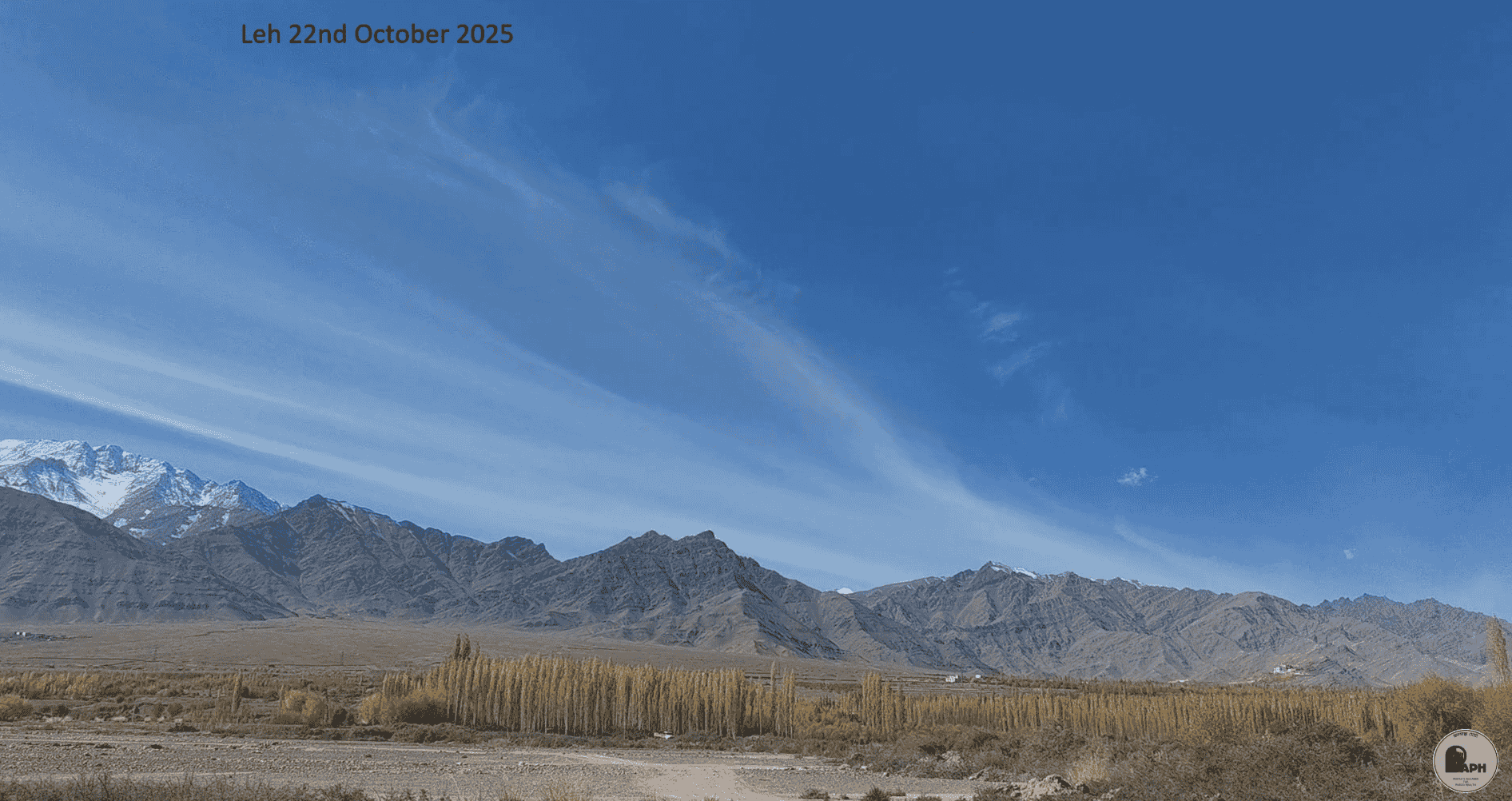
October, 2025
In terms of topography and weather, Ladakh stands in stark contrast to our state, West Bengal. Located on the Gangetic plains, our state exhibits a tropical climate whereas Ladakh is a high altitude cold desert. Nevertheless, we tried to explore the possibility whether there is any similarity between the environmental crisis in our state and in Ladakh?
In October 2025, we, the three musketeers of JanaSwasthya Morcha (People’s Alliance for Public Health), tried to find the answer to this question during our visit to Ladakh. There is, of course, a handy answer to this question, nowadays. From Ladakh to West Bengal to Honolulu, the core environmental crisis in any given place is always summed up in a single phrase: anthropogenic climate change or human-induced climate change. The primary driving factor for human-induced climate change is believed to be carbon dioxide and other greenhouse gases. Every environmental or ecological crisis is thus neatly explained.
The tendency to oversimplify a complex issue like the environmental crisis is evident in this answer. I hope I can explain our point by giving the example of Manali city. Located on the banks of the Beas River in Himachal Pradesh, the ancient village of Manali began developing into a town during the British era. Lately, every year during the monsoon, severe floods occur in Manali and terrifying videos of these floods go viral on social media. We are being told that the main cause of these devastating floods in the Himalayas is due to the melting of ice and glaciers on the mountains due to climate change.
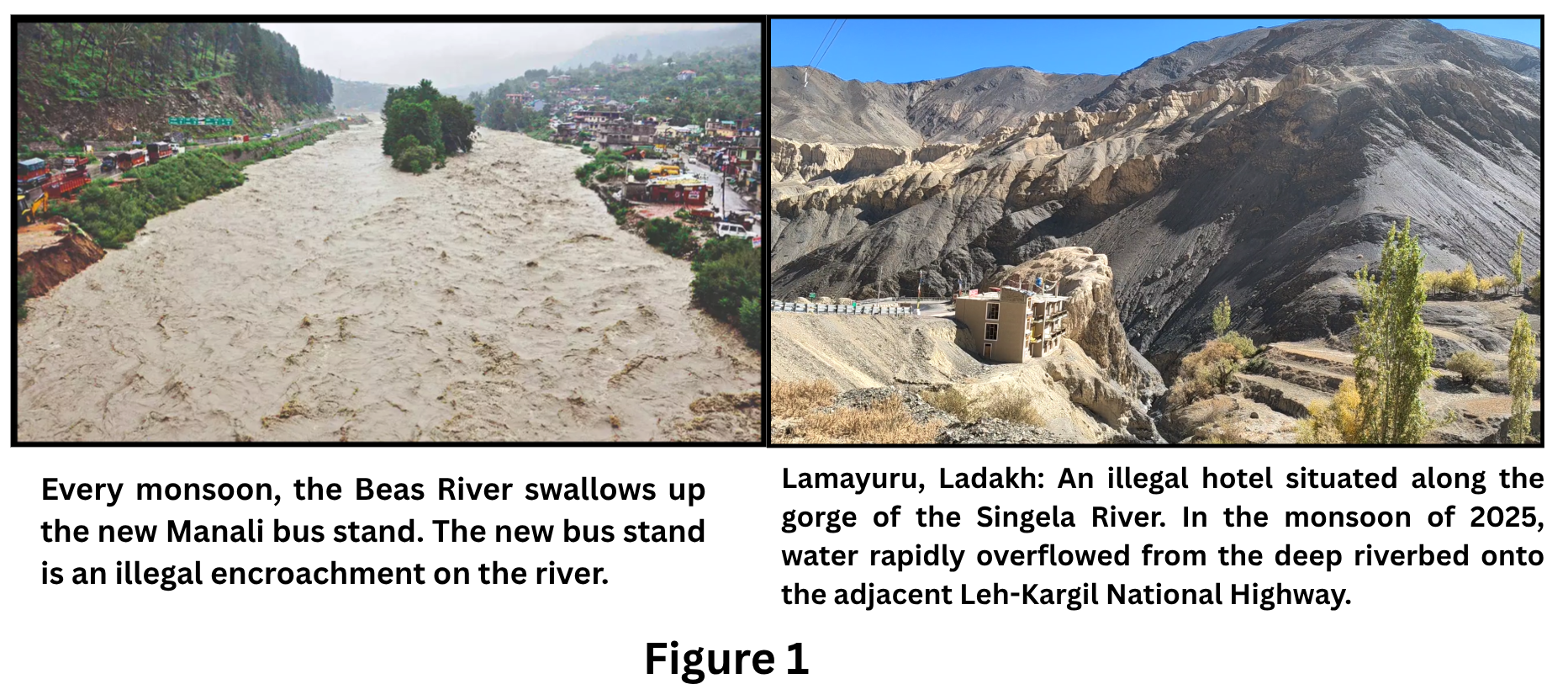
Based on our experience of traveling in that region since 2015 and observing the old photographs of the town kept in Manali's museums, we have realized that the expanding town of Manali has encroached upon almost half of the Beas River.
Due to unplanned urbanization, the river channel around Manali has become so narrow that the river water overflows its banks and floods the town during heavy monsoon rains. In fact, the town of Manali itself has encroached deep into the Beas River. This situation is not unique to Manali; Kullu and other towns in the region share the same plight (Figure 1).
Descending along the Beas River toward the foothills of the mountains, we can see several small and medium-sized river dams. As the river channel has been blocked and choked due to the construction of dams, Manali and its surrounding areas are regularly flooded during the monsoon season. Although the problems associated with big river dams are well known, hydropower is now considered as an eco-friendly option for energy. Therefore, the government is keen on constructing new hydropower projects and dams to combat climate change. Can Manali be saved from floods simply by imposing a ban on fifteen-year-old vehicles traveling to Rohtang Pass? (This rule has been in effect at Rohtang Pass for the past ten years.)
 These were some of the thoughts that crossed our minds while we travelled from flood-ravaged Manali to Leh, Ladakh. A curfew-like situation was still prevailing in Ladakh. The internet was shut down, and shops were opening only for a limited duration. Sonam Wangchuk and other leaders had already been arrested.
It is worth mentioning here that when we visited Ladakh in August 2015, we could not travel to the Nubra Valley due to flooding of the Indus River. During the monsoon season of 2025, Ladakh received 342% excess rainfall compared to normal. In September, the wettest month of 2025, Ladakh recorded a staggering 930% excess rainfall. A monsoon season had never been witnessed before in a high-altitude, cold desert region like Ladakh. Even today, many people in the villages and urban areas of Ladakh live in homes built using traditional methods and locally available construction materials. The thick walls of these houses can retain heat in the extreme cold during Ladakhi winters. During the day, ample sunlight and warmth can reach inside a traditional house. Staying in a concrete house in the freezing cold of Ladakh incurs a massive expenditure on room heaters or firewood. Therefore, till recent times, it has been more economically viable and convenient to live in old-style houses in Ladakh. However, of late, excessive rainfall is occurring every year. The construction method of the old houses was suited to a cold desert. Everyone is facing severe problems during heavy rains. Consequently, the demand for tin roofs or concrete houses is on the rise. Along with it the demand for energy has also soared recently.
Human life is intrinsically connected to the local climate of a place. For the past ten years, we have been hearing the theory of climate change as the sole reason behind excessive rainfall in the deserts of Ladakh. In this report, we would like to share our own experiences in this regard.
Land
Geologically, Ladakh is a part of the Tibetan Plateau. Ladakh lies in the rain-shadow region of the high mountain ranges of Himachal Pradesh and Kashmir. Many rare earth minerals are found in the soil of Ladakh. For ages, people have prepared arable agricultural land out of the barren soil of Ladakh to produce food grains like wheat, millet, and barley. Vegetables are cultivated mainly by setting up greenhouses or during summers. The traditional method of freezing winter rainwater into ice to use for agriculture during the summer has recently become famous as the "Ice Stupa."
However, we have observed that the influx of tourists into Ladakh has steadily increased over the last ten years. Agricultural lands, white sand deserts of Nubra, or the vast pastures of Hanle – all terrain types are being used indiscriminately to build hotels and sustain the ever-growing tourism industry. Rapid growth in tourism and changing rainfall patterns have seen to concrete buildings cropping up everywhere. Instead of the dry toilets of traditional houses, these concrete buildings are installing bathrooms equipped with commodes and tap water systems. This is increasing the pressure on the scarce water sources of the desert.
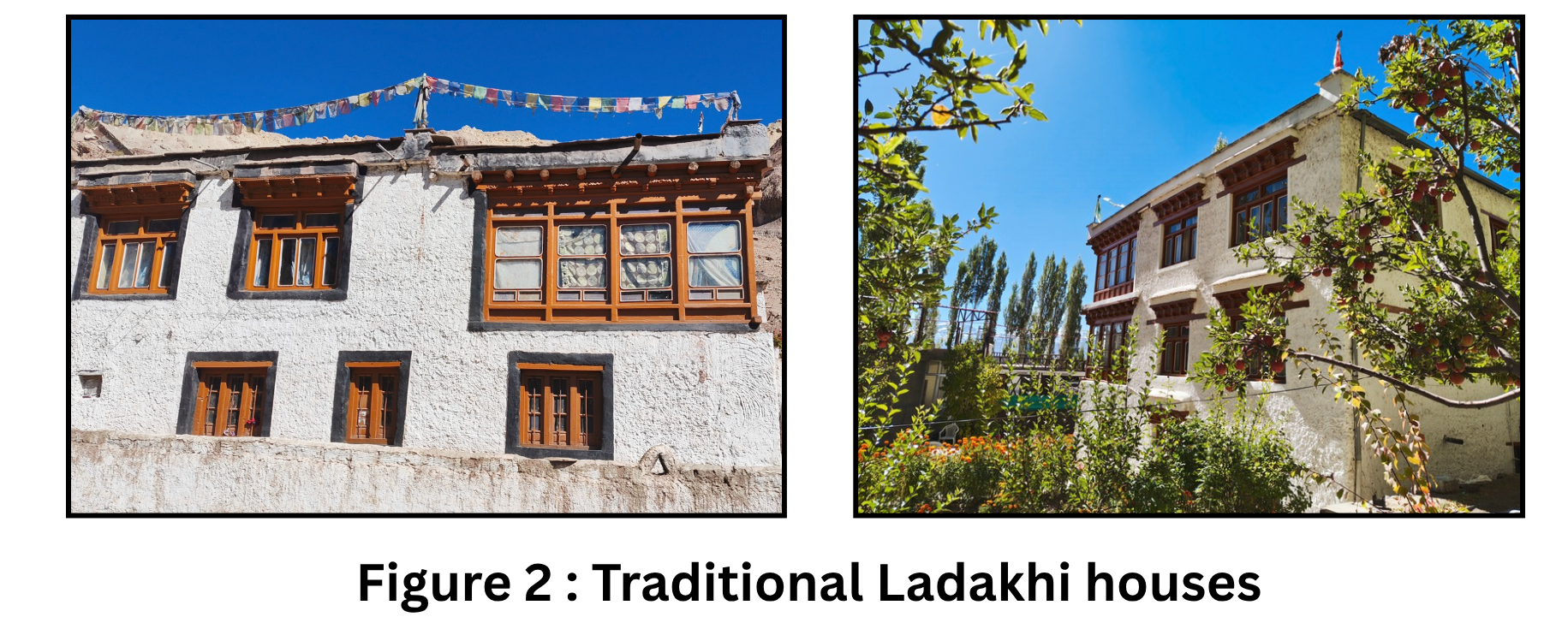
It is worth mentioning here that there is no arrangement for piped hot water supply anywhere in Ladakh (which is usually a standard feature in any cold region of the first world). During winters in Ladakh, the warmest temperatures are close to -10°C. It becomes impossible to use commodes, indian toilets, or tap water. Surviving the winter in Ladakh is virtually impossible without traditional houses and traditional dry toilets (Figure 2). Most of the concrete houses and hotels remain closed for six months a year. Yet, more and more new concrete buildings are being constructed every year. Local mountains are being blasted to produce stone and cement.
This reminded us of how wetlands and ponds are being filled up one after another in Kolkata and its suburbs to erect high-rises. Most of the flats in these newly constructed apartments remain vacant. Yet the construction of new high-rises does not stop. The reality is that whether it is Ladakh or West Bengal—government or private jobs are nowhere to be found. Incapable of generating employment opportunities, the government has surrendered the open lands to the brick-sand-cement syndicates to thrive upon.
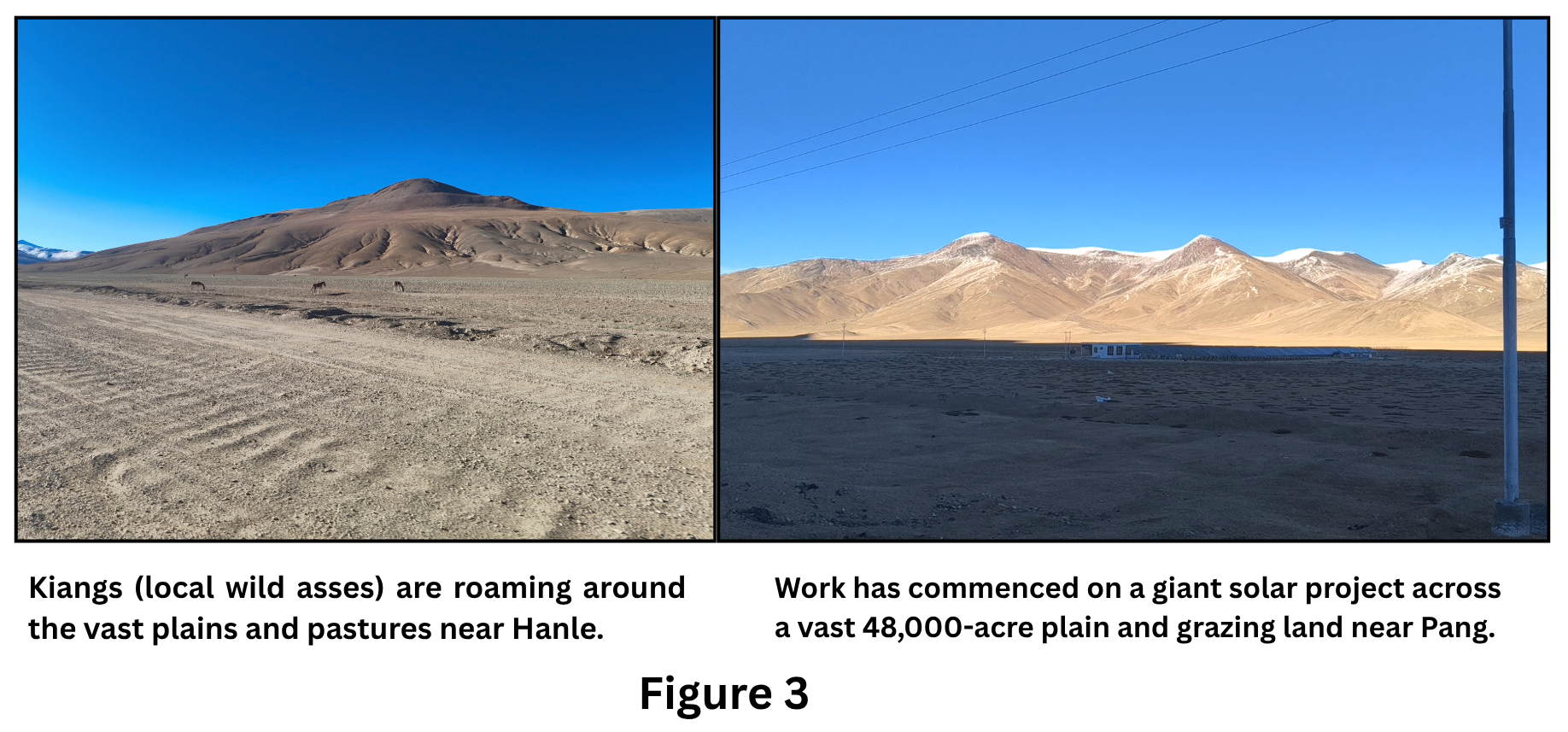
There are no forests in Ladakh and the amount of agricultural land is miniscule. Therefore, according to our government records, the majority of Ladakh's land is barren and is considered as wasteland. Consequently, under the guise of green energy initiatives, that land can easily be handed over to corporate companies. Following the abrogation of Article 370, a vast extent of about 48,000 acres of nomadic pastoral land near Pang valley and Sarchu in Ladakh have been allocated for a green energy park. This carbon-free initiative aims to meet Ladakh's rising electricity demand. We visited the site where the installation of solar panels has begun. It is being claimed that across the vast area where the solar panels will be installed, grass will be imported from Switzerland and planted so that the Pashmina sheep can continue to roam and graze freely underneath the panels just as before. Apparently, Swiss grass can grow in the shade of the panels. However, we have not heard of any assessment on whether the local Pashmina sheep can digest Swiss grass or whether it will cause any variation in the quality of their wool. Furthermore, it has not been disclosed how much water this Swiss grass will consume compared to the native desert shrubs and grass. For thousands of years, nomadic communities have used this land which is both their life and livelihood. They do not possess any land ownership documents. Thus, the land of the most marginalized class in Ladakh has been handed over to the corporates first and foremost. (Figure 3)
Water
Green hydrogen is also considered as a source of clean energy. At Leh bus stand, we saw 2 - 10 hydrogen-powered buses every day. Upon investigating, we found out that one ton of hydrogen gas is being produced daily through the electrolysis of the saline water from Pangong Lake. Gradually, only hydrogen buses will be used in Ladakh's public transport system, replacing other fuels. Producing one kilogram of hydrogen gas requires one liter of purified water and two liters of raw (untreated) water. We suspect that no thought has been given at all to the environmental impact of this project. Ladakh's saltwater lakes like Pangong, Tso Kar, and Tso Moriri are geological wonders. This region hosts a highly rare ecosystem with a vast number of migratory birds and other local wildlife.
Due to ever-growing demands, massive amounts of water are being drawn from the groundwater reserve in Ladakh. The pollution of the rivers is increasing. Now, if India rejects the Indus Waters Treaty and builds new river dams, the navigability and water flow of the rivers will decrease even further. All surface and ground water reserves in Ladakh are already under strain.
Geoengineering projects in Ladakh
It is observed that the rainfall patterns caused by the southwest monsoon in the Indian subcontinent have undergone some changes over the last ten years. Cherrapunji and its surrounding regions were famous for receiving the highest rainfall. Now, Cherrapunji receives considerably less rain than before. On the other hand, rainfall has increased in dry arid places like Rajasthan and Solarpur. Furthermore, we are seeing that the amount of rainfall in Ladakh has multiplied significantly. For this climate shift in Ladakh over the past few years, should we blame human-induced climate change (caused by excessive emissions of carbon dioxide and other greenhouse gases), or do "human-made" weather control technologies play a role here?
There was a time when the poet romantically said:
"Can you lend a single cloud
from Cherrapunji
to the heart of the Gobi n’ Sahara?"
Today, this technology for artifial precipitation is being regularly implemented not only across the world but also in India. Government data shows that for the past ten years, the government has used cloud seeding technology every year to induce artificial rain in the rain-shadow region of the Western Ghats mountain range in South India. As a result, it has been possible to generate up to 18% additional rainfall in that region. Recently, there have been records of this technology being used in Rajasthan and Delhi. In India, this technology has been used at various times since the 1950s in Kolkata and elsewhere.
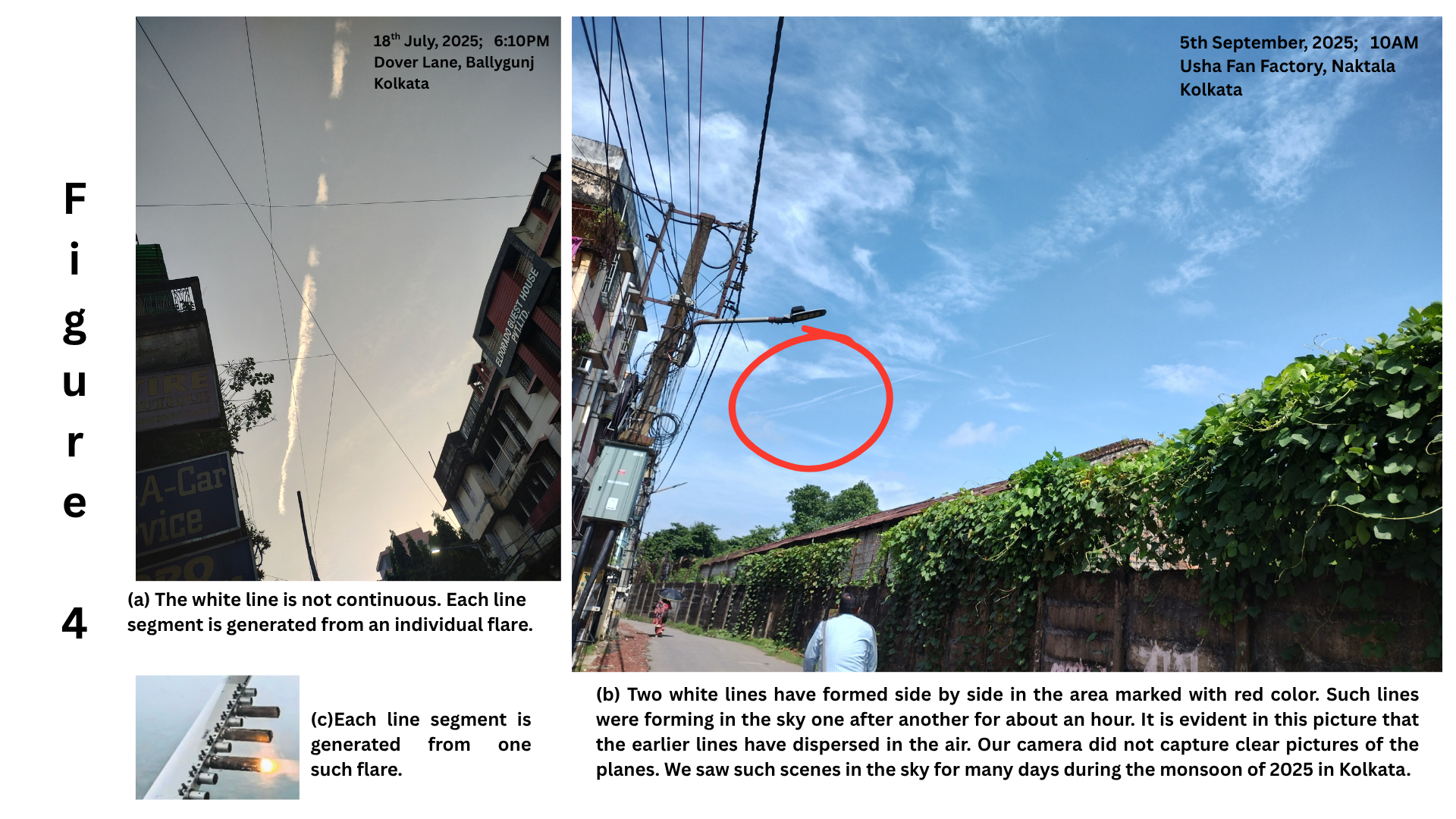
We regularly kept an eye on Kolkata and its suburbs during the 2025 monsoon season. We observed multiple planes flying in the sky over Kolkata during the monsoon, regularly creating lines of white 'smoke'. The planes continued to fly for several hours, and after that, we gradually saw clouds forming in the sky. Sometimes, the planes disappeared into the clouds after a while. Government documents state that calcium chloride and silver iodide are primarily used for cloud seeding in our country. Both salts are white in color. The solution of these salts is sprayed into the sky from the planes using flares or minor explosions. The water vapor contained in the flares can easily turn into ice crystals at high altitudes, creating white lines of ‘smoke’. These lines formed during cloud seeding look similar to contrails formed from jet plains, but are discontinuous in their appearance. Each section of the white line is formed from a single flare of cloud seeding. The photographs we took of the planes and white lines in the sky over Kolkata show that multiple white lines are formed in the sky within a short period of time (Figure 4).
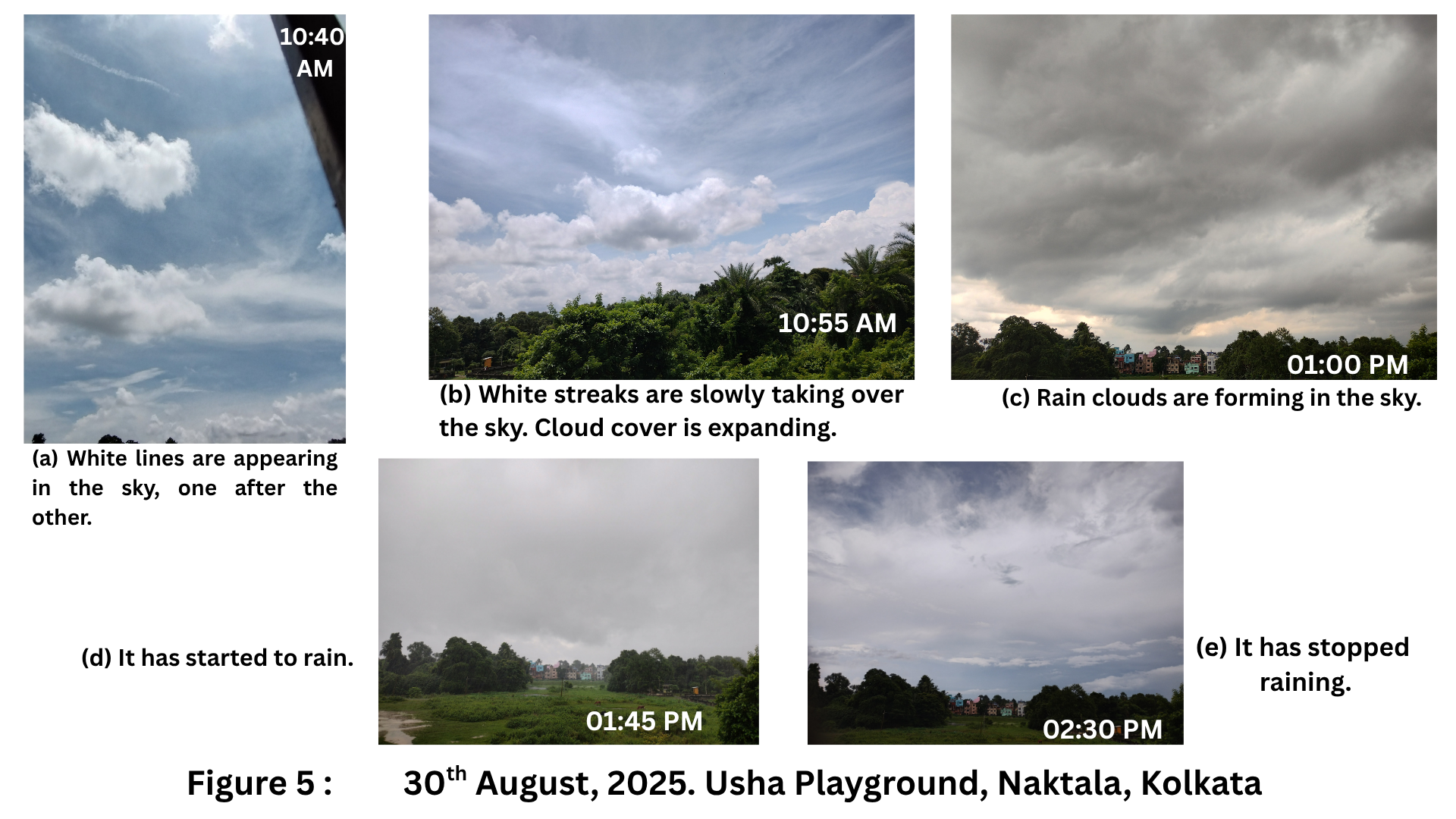
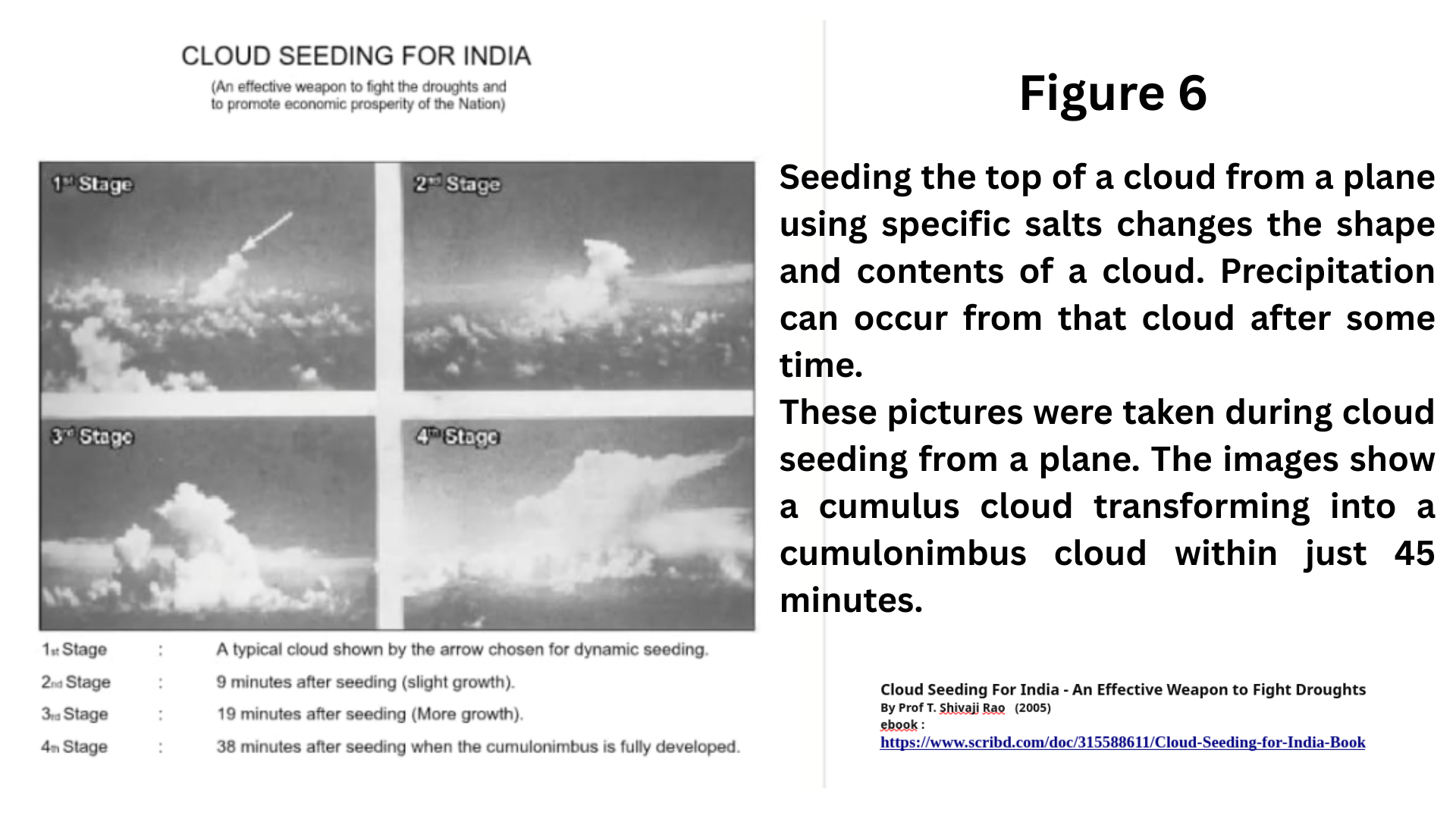
In Kolkata this year during the monsoon, on every single day that flood-like situations occurred, a massive amount of water poured down from the sky within a very short span of time. The experience of waterlogging in the city due to three consecutive days of continuous, dreary rain did not really happen this year. Figure 5 shows photographs of the sky taken at regular intervals over a considerable period on a specific day in an area of South Kolkata. We suspect that cloud seeding technology is being used every year in Kolkata and its suburbs. We have also captured similar pictures white lines forming in the skies of Kolkata during the months of December and January. The reason for our suspicion will become clear if the changes in clouds resulting from the application of artificial rainfall technology from airplanes (Figure 6) are compared with the photographs we have taken.
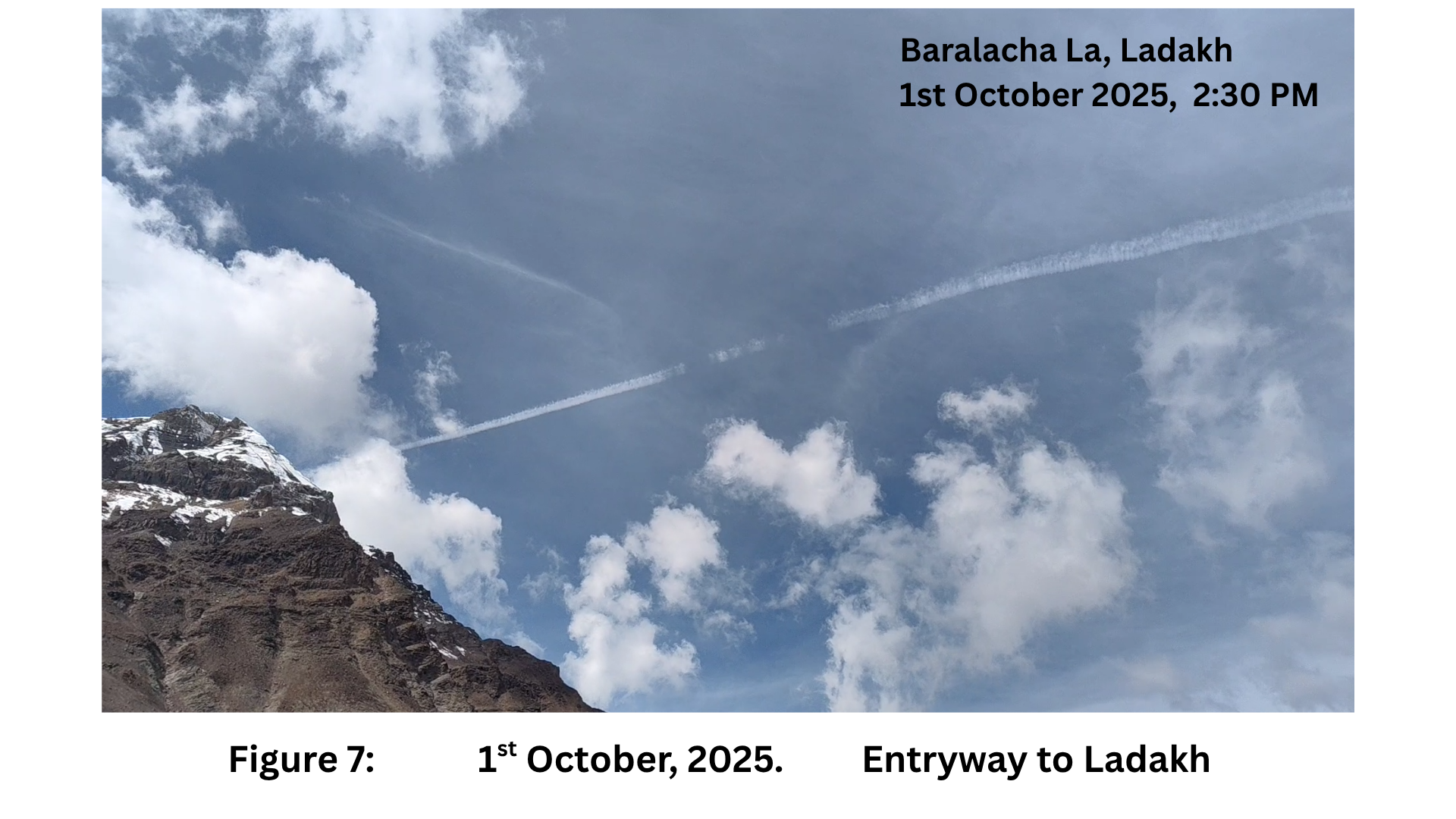
On October 1st, while traveling from Manali to Ladakh, we observed distinct white trails left by aircraft against a clear blue sky near the Baralacha La pass (Figure 7). Over the following week, we witnessed and photographed this phenomenon multiple times across Leh and the Nubra Valley. For the next ten days, Ladakh experienced consistently clear blue skies. Interestingly, during this clear period, we did not see a single aircraft leaving behind these white smoke trails. Furthermore, during the days we spent in Leh city, we regularly observed aircraft taking off and landing at the Leh airport, yet none of them produced these white lines in the sky. This stark contrast strongly suggests that the aircraft observed on the previous days were deployed for cloud seeding operations.
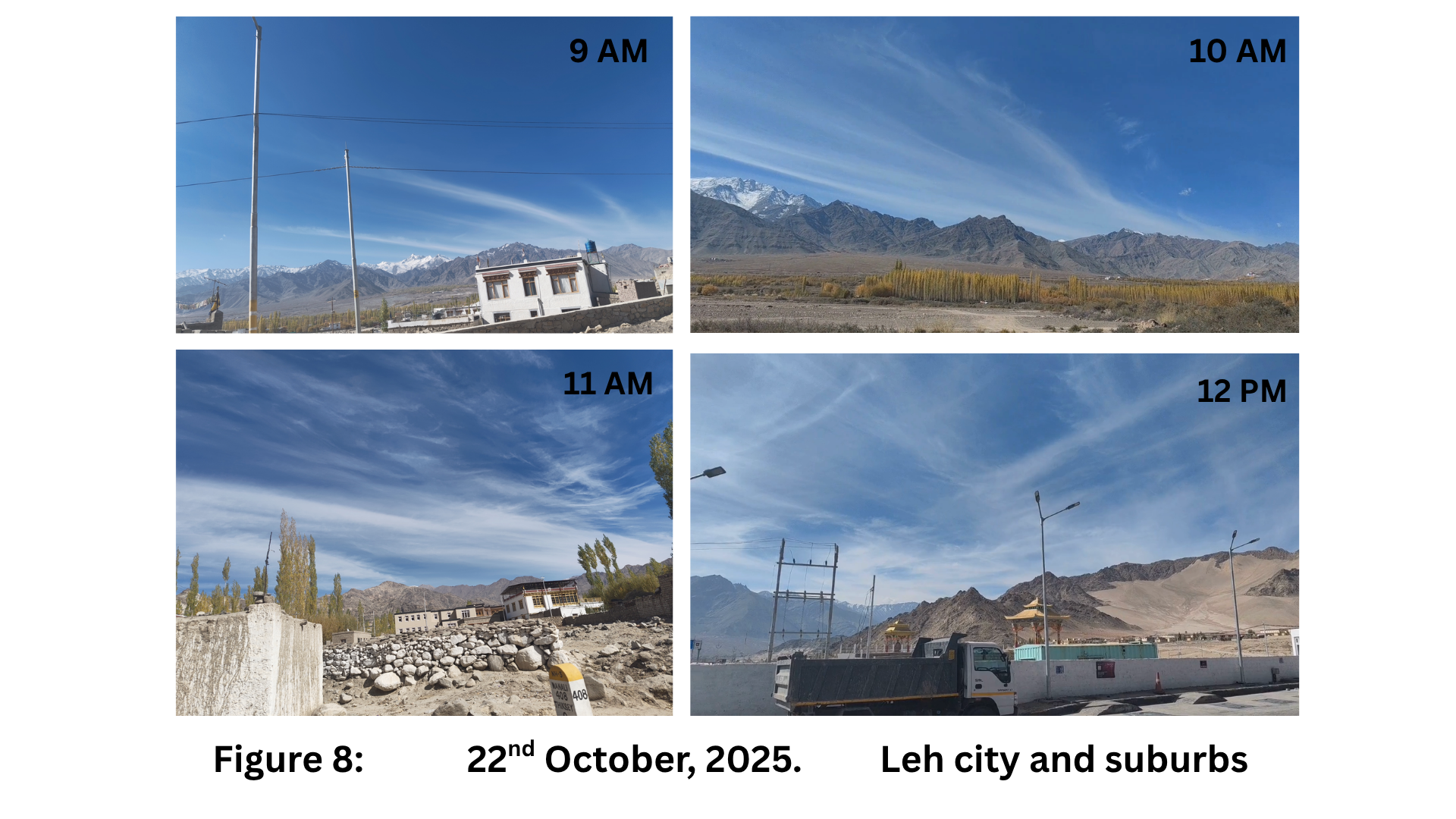
Again, from the morning of October 22nd, a few cotton-like clouds could be seen in the blue sky. Shortly after that, the sky gradually became filled with white trails. By three in the afternoon, the entire sky turned hazy. The sun was no longer visible. (Figure 8)
We have thought a lot about what the logic could be behind causing artificial rainfall in a desert like Ladakh. For instance, in Rajasthan, a private company had contracted another private company to induce rain for agriculture in soybean fields. We do not know whether this technology is being used for farming in Ladakh. But what could be the dangers of using this technology in agriculture? Can this technology trigger excessive rainfall or floods? If this technology is used in Ladakh, could it cause fluctuations in the amount of rainfall or snowfall in other neighboring regions?
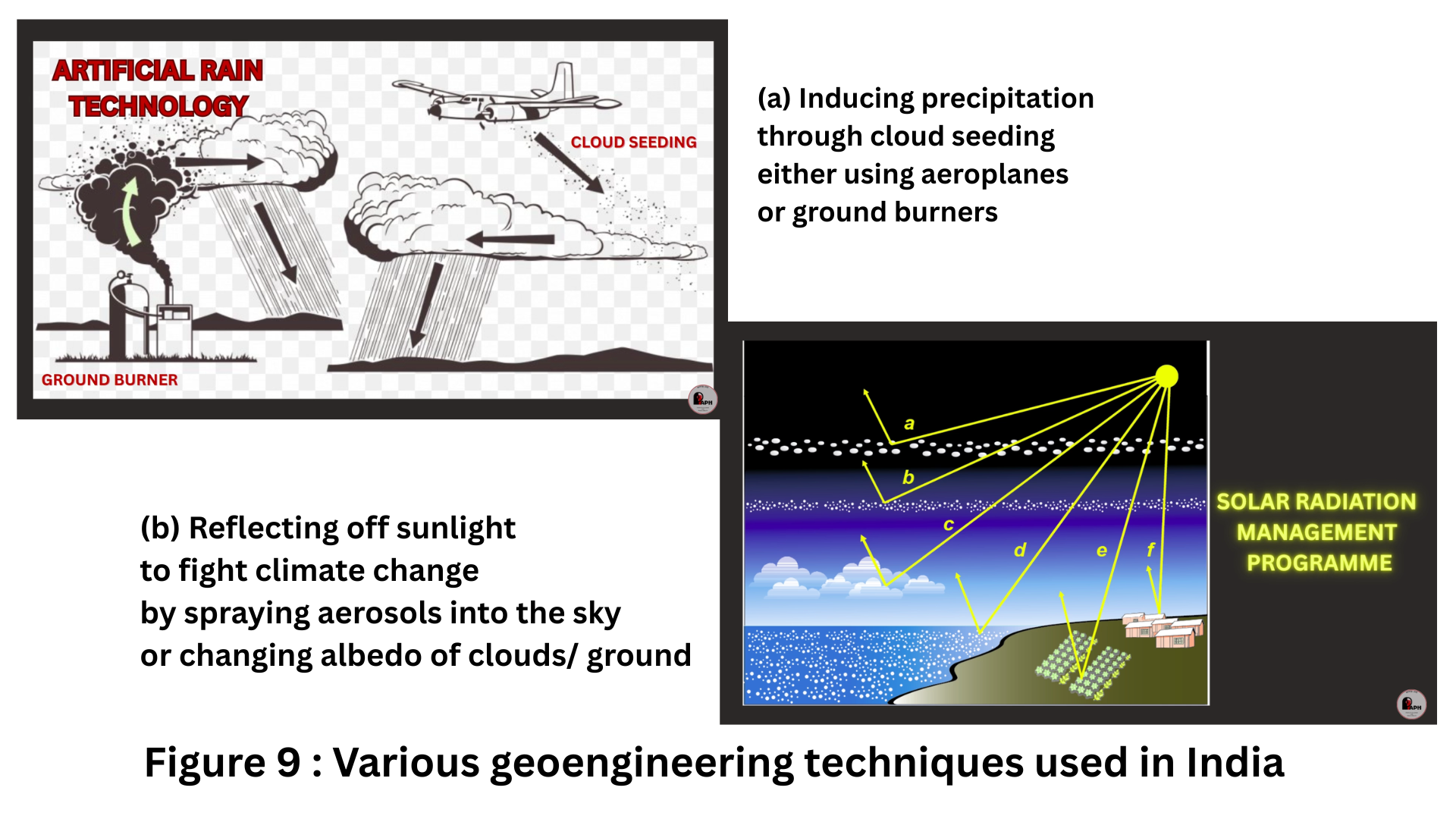
What is the objective behind using cloud seeding technology in Ladakh or Kolkata after the monsoon season or during the winter? Our question is whether aerosols are being sprayed into the sky to reduce global warming through the process of Solar Radiation Management (SRM). Publicly owned organisations like IISc are associated with the international 'Dimming the Sun' research. I would request everyone to consider whether there can be any scientific basis behind this attempt to prevent climate change by reflecting away sunlight from the earth. (Figure 9)
Moreover, a very important question arises: if the government is undertaking such a project to facilitate farming in a desert region like Ladakh, then why is it being done while keeping the public completely in the dark?
Flora and fauna
Situated at a very high altitude, Ladakh is known as a cold desert. This year we were extremely surprised to find mosquitoes in Leh city. As pollution climbs in Leh, Ladakh is also experiencing dramatic shifts in rainfall patterns, even though the average temperature has held steady over the last ten years.Over this same ten-year period, the afforestation around Leh city has increased substantially. This expansion of vegetation enhances atmospheric humidity, subsequently altering local weather patterns. Furthermore, exotic poplar trees have been extensively planted in urban areas for construction purposes. While these aesthetically pleasing trees successfully transform Ladakh’s arid landscape into habitable green spaces, their specific impact on the local water table remains unknown.
Another noteworthy point is that the local dogs in the villages of Ladakh are becoming feral (predatory). Several studies have highlighted this data. However, the data obtained from these studies is not being evaluated correctly. Attributing such feral behaviour of dogs to climate change is an oversimplification at plain sight. The village dogs are a para-domestic breed. This means they have lived off food provided by humans since time immemorial. They might have hunted occasionally to preserve their instincts, but they were primarily always dependent on the food given away by humans.
Over the last 10 to 20 years, the dietary habits of the people in Ladakh (and the Spiti Valley of Himachal Pradesh) have been changing. Under the influence of Buddhism in this region, people are adopting a vegetarian diet. Vegetarian diet is not prevalent among Buddhists in other parts of the Indian subcontinent. It is worth noting that vegetarianism is not particularly common among Nepalis, Bhutanese or Lepchas following Buddhism. Furthermore, Buddhists in China, Southeast Asia or elsewhere are not vegetarians either. In Northern India, however, there is a growing trend among Buddhists to abandon non-vegetarian food and look down upon it.
In Ladakh and Spiti, shifting human dietary patterns have triggered a severe food scarcity among village dogs. As a survival mechanism, these animals have resorted to preying on local livestock, including goats, donkeys, and calves. Consequently, the canine and feline populations across these villages have entirely feralized, with cats primarily subsisting on rodents and birds — a phenomenon we personally observed in Lamayuru in Ladakh this time. Furthermore, during our fieldwork in Spiti in 2017, we witnessed a pack of dogs hunting and consuming a donkey in the early hours of the morning. Unfortunately, environmentalists have largely failed to accurately assess the gravity of this situation.
Our extensive field observations across the region between 2015 and 2025 consistently support these findings. Interviews with local residents revealed that they no longer feed domestic animals, primarily because they do not have any fish/ meat/ eggs at home and dairy is scarcely available in the region. It is noteworthy that numerous domestic and international non-governmental organizations (NGOs) are actively engaged in wildlife and ecological surveys across Ladakh and Spiti. Given that the government depends heavily on NGO-generated data and their recommendations for regional policy formulation, addressing this gap is critical. Over the past decade, our travels in Ladakh and Spiti have frequently intersected with these NGO field workers tasked with evaluating the region's wildlife and environment.
Humans
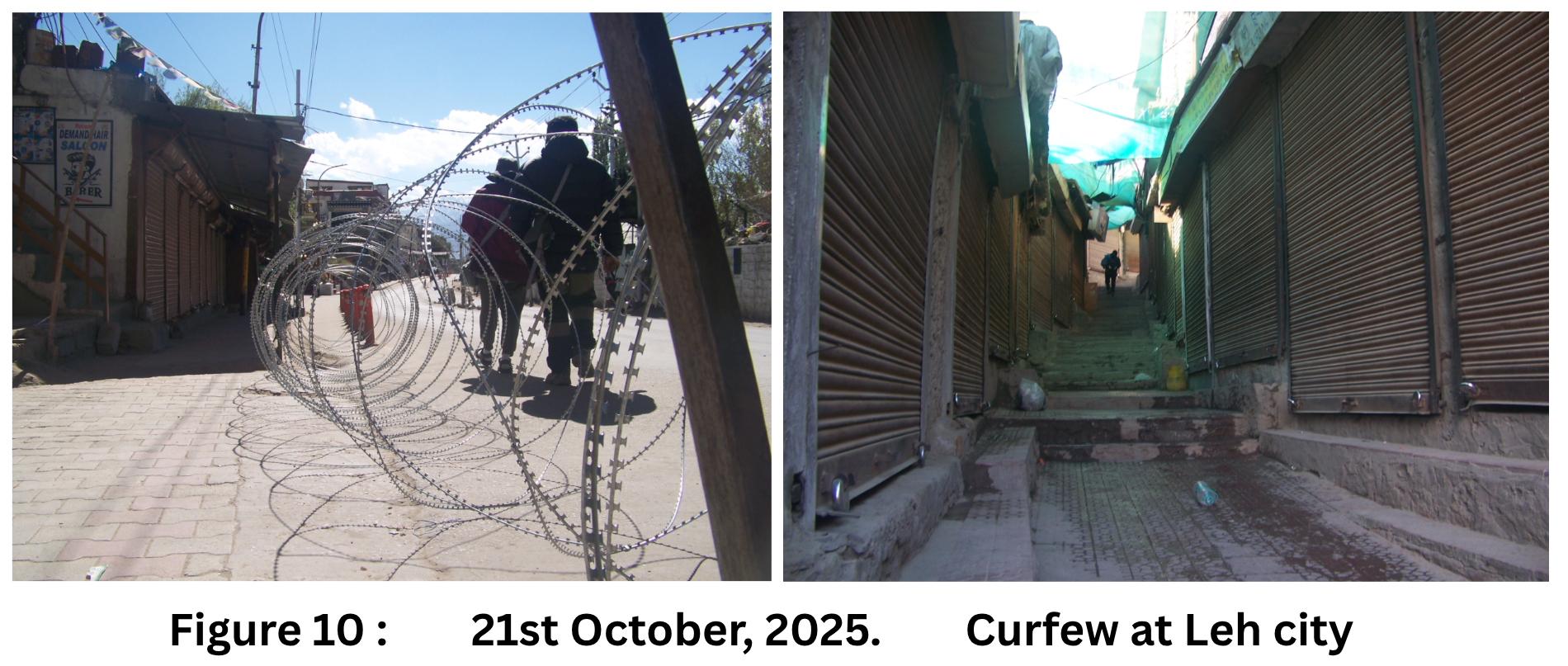
After the abrogation of Article 370, the Central Government has completely betrayed the people of Ladakh. Neither the declaration of Ladakh as a separate state nor the promise of the Sixth Schedule of the Constitution has been kept by the Central Government. Concurrently, there has been a rapid influx of corporate-oriented projects in the region, within which local Ladakhis are no longer prioritized for employment opportunities. As previously noted, lands belonging to Ladakh’s most marginalized nomadic communities have been requisitioned for eco-friendly green energy parks. At the time of our visit to Ladakh, the police administration had created an atmosphere of fear by imposing a curfew and cracking down on and detaining Ladakhi leadership and activists, including Sonam Wangchuk. (Figure 10)
A massive expansion of road networks and housing infrastructure is underway across Ladakh, driven by military requirements and booming tourism. Migrant laborers have long been the backbone of these construction projects. While our visit in 2015 revealed a workforce predominantly from Bihar, by 2025, a significant shift had occurred—a vast number of these migrant construction workers were now Bengalis from Murshidabad. Conversations with them revealed that in the Nubra Valley alone, nearly five hundred workers from Murshidabad now toil during the summer months.
Their daily wages range between 400 and 700 rupees. However, deductions are made for their food and lodging, and their accumulated salaries are only paid out in a lump sum after three to six months when they are ready to return home. Even then, arbitrary deductions are frequently made under various pretexts. Furthermore, many lack basic winter wear, as jackets are strictly provided only on active workdays.
During our journeys from Leh to Nubra, Hanle, and Lamayuru, many of these Bengali construction workers were our co-passengers on buses and shared vehicles. It was evident that many lacked adequate warm clothing or even the money to buy food along the way. The imposition of a curfew compounded their misery, severely disrupting transport and accommodation. This created immense hardship for these ordinary working-class individuals just trying to commute and eat. While a few high-end restaurants remained open during the curfew, budget-friendly roadside eateries and low-cost food stalls were nearly impossible to find.
Let us go back to the first question: are we seeing any similarities? Despite the geographical and social differences, the common thread is clear — the change brought on in the name of development is allowing capital to swallow up nature, lives, and livelihoods, fracturing public health. If this shift is forcing the dogs of Ladakh back to their primordial wild instincts, will it not also push human civilization back by thousands of years?
[The report was prepared by our members Poulomee, Gaurab and Bishwanath.]
[The report first appeared in Bengali in the Book Fair 2026 edition of 'JanaSwasthya JanaBarta', the official organ of JanaSwasthya Morcha (PAPH)]